Nintendo Switch Modding
Professional PicoFly modchip installation for every Nintendo Switch model.
Pricing
Modchip installation
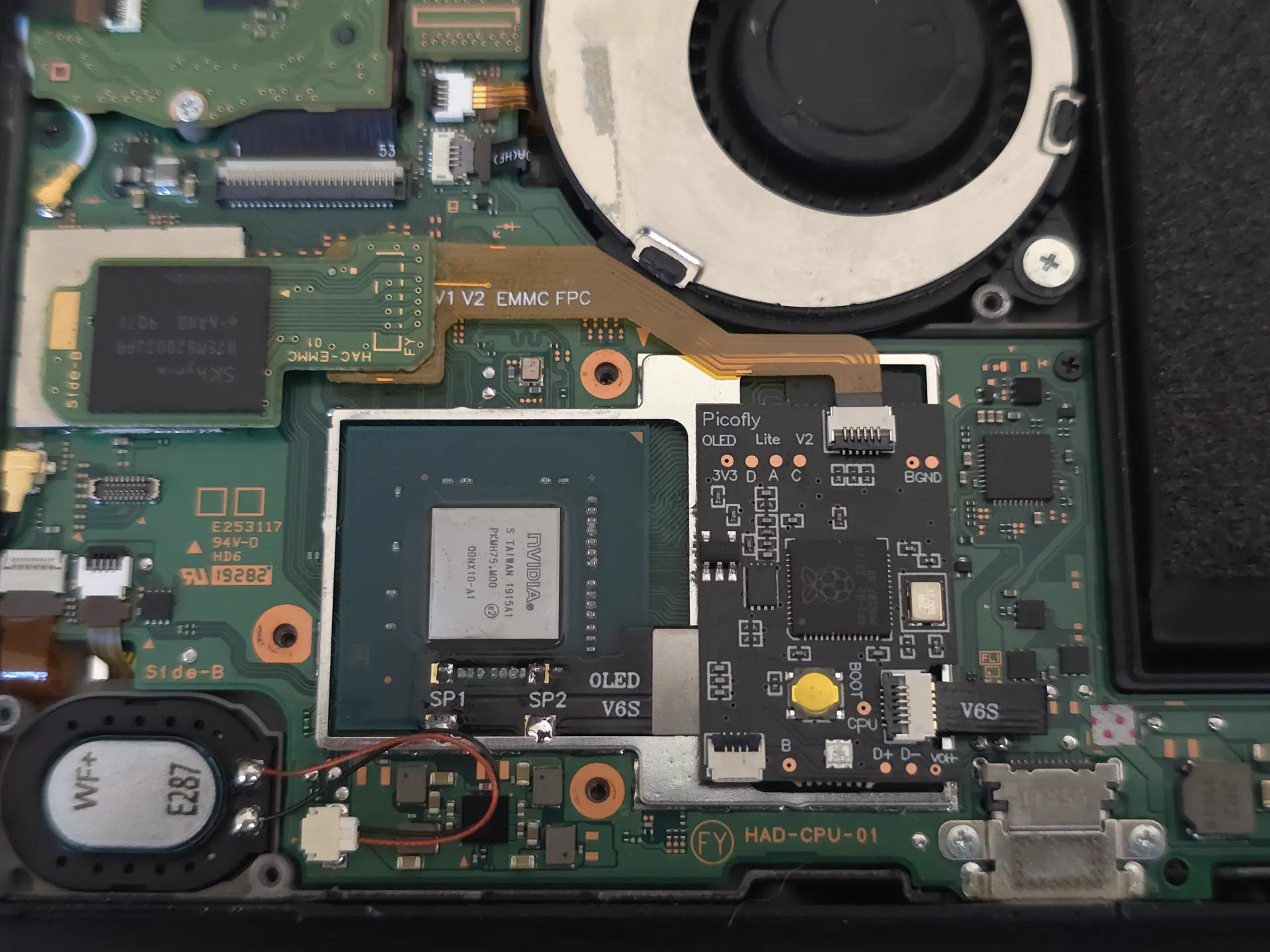
$80+Your console is carefully disassembled, the PicoFly modchip is installed, and the unit is verified to boot before it heads back to you.
- $80 for Switch V1, V2, Lite, and OLED with the DAT0 adapter
- $120 for OLED with the kamikaze method (see the FAQ)
- Covers the modchip installation only
Board repair
$50+Micro-soldering repair for damaged boards — ripped pads, torn traces, and broken FPC connectors rebuilt under the microscope.
- $50 covers the first repair on a device
- +$25 for each additional repair on the same device
- Each additional device starts at $50
Shipping is not included in the prices above and may be billed separately. Every mod and repair is backed by a workmanship warranty — see shipping, returns & warranty.
Customer reviews

Reviews are collected and hosted on Google.
Frequently asked questions
Can the mod be reversed?
Yes, with some caveats. The PicoFly attaches to internal connection points by soldering, and desoldering those points takes the chip back out. Removing the chip doesn't undo everything the installation changes, though.
Shielding and heat spreader. The MOSFETs are installed right next to the APU, so the aluminum shielding/heat spreader that covers it is removed. The heatsink is then mounted directly to the die instead, for better thermal performance.
OLED CLK point. The OLED also needs one side of the shielding mounted to the board above the APU cut away to expose the CLK point, and the point's top layer is ground down to expose the copper underneath.
Kamikaze installs. On OLED consoles modded with the kamikaze method (covered in the next question), the chip itself still comes out cleanly and the console works normally, but the small area ground into the board to expose the DAT0 layer is permanent — that spot will always show the mod was there.
What is the "kamikaze" method on OLED consoles?
On the OLED, one signal the modchip needs — DAT0 — isn't exposed on any convenient point, so there are two ways to reach it.
The kamikaze method grinds away a tiny area of the board to expose the buried DAT0 trace, and a fine wire is soldered directly to it. The name comes from the fact that the grinding can't be undone. Done well, it's the cleanest electrical connection possible — no added parts, no fitment changes, nothing extra to fail down the road. The tradeoffs: it permanently marks the board, and it takes a steady hand under the microscope — grinding too deep can destroy the trace, which is why it belongs in experienced hands.
The DAT0 adapter is a thin ribbon-flex board that sits between the eMMC module and the mainboard and breaks the signal out with no grinding at all. Its strength is that it's fully reversible and leaves the board untouched. The tradeoffs: it adds one more component to the boot chain, and adapter quality and alignment matter — a marginal flex can cause intermittent boot issues that a direct solder joint never will.
Both approaches are proven. The kamikaze method is $120 and the DAT0 adapter is $80. When you reach out about an OLED, I'll go over which one fits your priorities — maximum long-term reliability versus keeping the board pristine.
What is the turnaround time?
Typical turnaround is 1–3 business days from the day your console arrives, depending on the number of orders currently being processed. Shipping time to and from is additional.
Where are you located?
I'm based out of Cincinnati, Ohio, and consoles can be mailed in for service. Local drop-offs are also welcome — if you're interested, reach out through the contact section below to arrange one.
Ready to mod your Switch?
Send an email with your console model and the service you're after, and I'll reply with the next steps.
[email protected]Nintendo Switch is a trademark of Nintendo. VFLARED MODDING LLC is an independent business and is not affiliated with or endorsed by Nintendo.